Unknown's avatar

About tadbartlett

I am special counsel at Fishman Haygood LLP, focusing on appeals in all matters, as well as litigation in environmental land-damage, coastal land-loss, and complex commercial matters. I am also a writer, and I'm the managing editor of literary journal The Peauxdunque Review.

Bartlett and Staat publications

Three more forthcoming publications are imminent from the land of Peauxdunque. Tad Bartlett has learned that his short story, “Tree Houses,” will be published online by The Carolina Quarterly; and that his short story, “Addressing You,” will be published in the Spring 2015 issue of Euphony Journal.

Meanwhile, Emilie Staat will have her short-short, “Ought,” published in the Like a Girl ‘zine, a “pre-show” preview of the Lucid Moose anthology.

Keep an eye out for further Peauxdunque updates!

Pruyn publishing new poems

Peauxdunque poet Cassie Pruyn has a whole host of new poem publications forthcoming! Her poem, “Flaneur on Royal Street, New Orleans,” will be published in Blue Lyra Review’s 2016 print anthology. “The House on Tator Hill” is slated to be published by Lunch Ticket, out of Antioch University in Los Angeles, in its Summer/Fall 2015 issue. And Cassie’s current run of publications will also see “Flaneur in St. Louis Cemetery No. 1” published in the Los Angeles Review in Fall 2015, issue 18! In addition, Cassie has a review scheduled to post at 32 Poems very soon.

Fantastic work by Cassie, appearing all over the place, so keep your eye out!

Peauxdunque in The Pinch and Tupelo Quarterly Review

Emily Choate‘s latest publication–her story, “Stump Winter, Indian Summer”–is now available in Issue 6 of the Tupelo Quarterly Review. When you read it, you won’t be disappointed.

Also, Maurice Carlos Ruffin will have a new story, “Fast Hands, Fast Feet,” coming out in the next issue of The Pinch. Keep your eyes peeled for that. As always, as Peauxdunque publishes, we’ll let you know where to go find it!

More Peauxdunque publications, plus My Sunshine Away

Peauxdunquian Emily Choate will have her story, “Stump Winter, Indian Summer,” published in Tupelo Quarterly‘s upcoming issue! Also, Maurice Carlos Ruffin‘s “Beg Borrow Steal” will appear in the spring issue of the Kenyon Review.

Also, we’re happy to note that friend-of-Peauxdunque (and mentor to several of us through his direction of the Creative Writing Workshop at UNO and the Yokshop Writing Workshop) M.O. Walsh is celebrating the release today of his excellent debut novel, My Sunshine Away, by G.P. Putnamn’s Sons. Emily Choate reviewed My Sunshine Away recently for Chapter 16.org. It’s an excellent and fascinating novel, so buy it and read it.

Peauxdunque’s Pushcart nominees

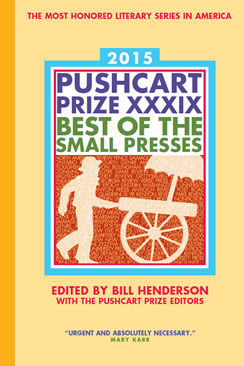
Pushcart Cover

Peauxdunque is proud to boast two Pushcart Prize nominees among its members this year! Founding Peauxdunquian Maurice Carlos Ruffin has been nominated by The Knicknackery, which published his story, “Heathen,” in its Issue Two. And Caroline Goetze, the newest denizen of Peauxdunque, has been nominated by Quaint Magazine for her story, “The Night Baker,” published in that magazine’s inaugural issue.

Congratulations, Maurice and Caroline!

Peauxdunquians reading at Words and Music

On Thursday this week, November 20, the annual Words & Music Conference kicks off at the Hotel Monteleone in New Orleans, featuring a number of award-winning writers, as well as a strong cast of editors and agents. Also, at the 3:45 session on Thursday, several Peauxdunque writers have been selected to join in a reading of new works.

Amy Conner, author of the new novel, The Right Thing, will be mistress of ceremonies for the event. Among those invited to read are Maurice Carlos Ruffin, winner of the Faulkner Society’s 2014 gold medal for Novel-in-Progress for All of the Lights, Kay Sloan, the 2014 winner of the Novella gold medal for Give Me You, and the winner of the Short Story gold medal, N. West Moss, for Omeer’s Mangoes, who was also a runner-up in the Novel-in-Progress category, who will be reading excerpts from their winning work. Others invited to read are Terri Stoor, a previous short story gold medal winner, and Andy Young, a previous gold medal winner for poetry, who has a spectacular new collection out, All Day It Is Morning. Competition finalists Tad Bartlett, J. Ed Marston, and Emily Choate, will also be reading, along with Mary Helen Lagasse, prizewinning author of The Fifth Sun, who will read from her new book, Navel of the Moon, scheduled for 2015 release. Event is included in writers and sponsors packages. There will be a cash bar.

Ruffin and Pruyn, publishing again!

In publication news from Peauxdunque, we’re happy to announce that Maurice Carlos Ruffin‘s story, “The Boy Who Would Be Oloye,” has been accepted for publication by Massachusetts Review; and that AGNI Online has accepted for publication Cassie Pruyn‘s poems, “Love Lost Lounge” and “Maine Morning, Age 5.”

“The Boy Who Would Be Oloye” was recently named a finalist in the short story category of the William Faulkner-William Wisdom writing competition (Maurice was named the winner of the novel-in-progress category of that competition and the first runner-up in the essay category). “Love Lost Lounge” was a finalist in the poetry category of that competition this year.

Many congratulations!

The Writing Process Blog Tour: Tad Bartlett

And now for Tad Bartlett‘s stop on the Writing Process Blog Tour’s four questions:

What am I working on right now?

I’m working on a linked collection of novella and stories tentatively called Joe Stories. What Richard Linklater’s Boyhood is to the movie and to Texas, Joe Stories aims to be to the novel and to Alabama. Joe Stories chronicles the maturation of Joe Alsobrook, from an 11-year-old malcontent fantasizing about escape above and out of his small, racially troubled Alabama town in the story “Tree Houses,” through a 25-year-old young man, not long married, calming into a love that overcomes a turbulent past. Each of the short stories picks up events as Joe grows up, snapshots in time and relationships. The short stories use Joe as the POV character, whether in first person, faux second person, or close third, while the novella (Marchers’ Season) tells the turning point event in Joe’s life–a series of protests during his senior year of high school–through the close third-person POV of Gray Alsobrook, Joe’s dad. I’ve been working on some of the stories in the collection since 2006, and hope to finish the novella and the collection by the end of 2014. (And I damn well better, because it’s my MFA thesis, as well, which I’m due to turn in by the beginning of January 2015).

How does the work differ from others in its genre?

Hard to say, because it definitely comes from a tradition, though maybe it differs in that it comes out of several traditions. I try to honor the lyricism and controlled abandon of the Beats, while paying close attention to the societal and intergenerational debt themes of the work of folks like Lewis Nordan and Barry Hannah and the other “grit lit” writers. At the same time, I hope the stories’ calling up of place is reminiscent of Tom Franklin’s work, among others. But really, how it’s different or distinguishes itself is a judgment to be made by readers, not me. I can only write what I write.

Why do I write what I do?

Because these are the rhythms and pictures that come to me. Because I hope through translating those rhythms and pictures into words, maybe I can understand myself better and how I fit in with the people around me, and maybe the same can happen for others who come in contact with the work. Also, because it’s fun.

How does your writing process work?

I think about a piece for a long time, trying to figure out how an initial picture can evolve and justify a full story, who a character in that picture is, where they come from, where they might get to in the story, what unique element or difficulty can pop up in the story. I do that figuring and thinking for many weeks, usually, between the pop of the initial idea and the sitting down to write it, walking around with it in my head, folding into it things I walk past on the street or articles I read or snippets of conversation I hear. But then I steal time from wherever and whatever I can, from job or from sleep, and capture it as quickly as possible, in a couple days at most. Then I let a couple very trusted and reliable readers tear at the draft. Then I straighten things up for a week or so. Then I let it sit. Then I revise it and wonder about completeness. Sometimes that’s it. Sometimes I revisit and revise and tear up and rewrite over the course of multiple years, with new pictures and stories working in the meantime that may or may not influence how I think about the pieces that are still in process.